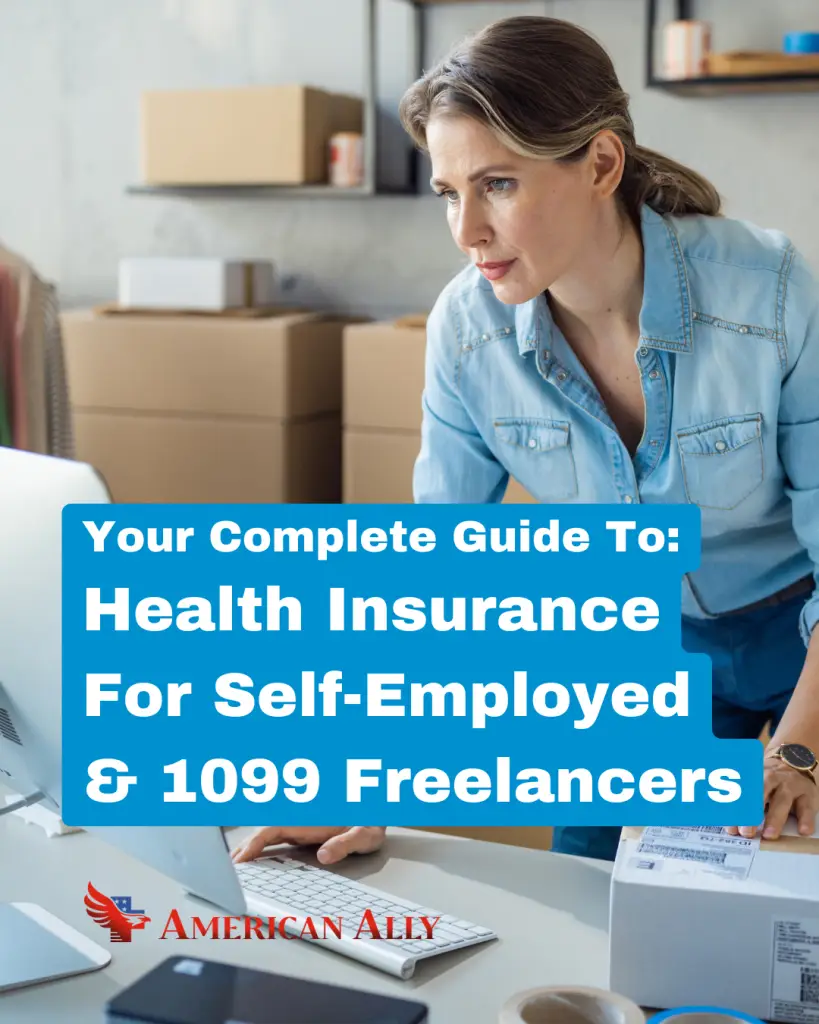
If you’re self-employed, a 1099 freelancer, or running a small business… you’ve probably looked at your health insurance options and thought: “There’s no way this is what people are actually paying.”
And unfortunately… it often is.
Without an employer contributing to your coverage, you’re left navigating a system that can feel expensive, confusing, and unpredictable.
This guide will walk you through:
- Why health insurance costs so much when you’re self-employed
- Your real options (and how they actually work)
- What to look for in a plan
- And how many self-employed Americans are lowering costs while improving their coverage
Why Health Insurance Costs More When You’re Self-Employed
The biggest reason is simple: You’re no longer splitting the cost with an employer.
According to the Kaiser Family Foundation, the average employer-sponsored family plan costs about $27,000 per year, with employers covering a large portion of that cost.
When you’re self-employed:
- You pay 100% of the premium
- You lose access to group-negotiated pricing
- You may fall into a “subsidy gap”
At the end of Open Enrollment 2025, Congress announced that they would not be renewing the enhanced subsidies, which disqualified anyone making over $65k a year from receiving a meaningful reduction in their insurance premiums on their ACA Marketplace.
Real-World Example:
- A freelance graphic designer earning $75K/year very likely will not qualify for meaningful subsidies
- A married couple earning $120K+ often pays full ACA premiums
- A small business owner may find traditional group plans too expensive to offer
See What You Could Be Saving:
Your Health Insurance Options (with the real pros and cons)
1. ACA / Marketplace Plans
These are the plans most people default to.
Pros:
- Guaranteed coverage
- Covers pre-existing conditions
- Great for people with ongoing health conditions
Cons:
- High deductibles, copays, coinsurance
- Limited networks (HMO/EPO)
- Expensive without subsidies
2. Health Sharing Plans
These are often marketed as low-cost alternatives. But health sharing ministries are not insurance, and coverage is not guaranteed.
Pros:
- Low cost
Cons:
- Not real insurance
- No guarantee of coverage
- No regulatory oversight
- Exclusions on pre-existing conditions
3. Private PPO Plans
This is where many self-employed individuals start looking once they understand how the system works.
Pros:
- Low cost
- No copays or coinsurance
- No outpatient deductibles
- Nationwide PPO network
- Flexible (travels with you)
Cons:
- Underwritten (based on health)
- Not best for people with ongoing health conditions

What Self-Employed Individuals Actually Need in a Health Plan
If you strip away the marketing, most self-employed individuals want:
✔ Affordable monthly premium
✔ Predictable costs
✔ Access to doctors nationwide
✔ Coverage they can actually use
✔ Protection from surprise bills
✔ Flexibility across states and jobs
The challenge is that most traditional plans don’t check all of those boxes.
How American Ally Private PPO Plans Work
American Ally offers private PPO enhanced indemnity plans, designed for individuals who want more control and predictability.
Key Features:
- $0 copays
- $0 outpatient deductibles
- Nationwide PPO access
- Telehealth included
- Access To Patient Advocacy Support
What Makes This Different:
Instead of you having to pay for everything until you hit your deductible, these plans pay benefits immediately based on the services you are using. It’s called Day-1 coverage and it’s available on many benefits.
In some cases you may even receive cash-back if your provider bills less than the benefit.
Who This Type of Plan Is (And Is NOT) For
Good Fit:
- Self-employed earning above subsidy thresholds
- Freelancers, consultants, 1099 workers
- Small business owners under 50 employees
- Healthy individuals seeking flexibility
Not Ideal For:
- Individuals needing immediate coverage for major pre-existing conditions
- Individuals and families who qualify for substantial ACA subsidies
I spoke with a licensed agent who showed me how I could stay on my TRS plan for about $19/month—and move my husband and kids to a more affordable private plan.
That one change saved us over $650/month—more than $7,000 a year back in our pocket."
(*Name and identifying details changed for privacy.)
The Hidden Advantage: Patient Advocacy
Most insurance companies: Sell you a plan and disappear
Our Patient Advocacy Support Team stays with you!
With our advocacy support, members can:
- Pre-price procedures before care
- Find cost-effective providers
- Get help filing claims
- Negotiate or reduce medical bills
“Unexpected medical bills often create anxiety, confusion, and frustration for patients. When charges do not align with what patients were told to expect, it can damage trust between patients and providers. This emotional strain can discourage individuals from seeking future care or fully engaging in recommended treatment plans.
For many patients, navigating billing disputes is overwhelming and time-consuming. Long hold times, unclear explanations, and repeated paperwork requests can make patients feel unsupported. These negative experiences may overshadow the quality of clinical care received, shaping how patients perceive the entire healthcare encounter.” – Why Medical Billing Errors Are One Of The Biggest Hidden Threats To patient Care
Most people just don’t have someone helping them navigate the billing side of their healthcare.
That’s what we do.

Finding Affordable Health Insurance
As A Freelancer Doesn't Have To Be Hard...
If you’re self-employed, it’s easy to feel like your only choices are:
- Overpay for coverage you don’t use
- Or go without it entirely
But that’s not the full picture.
There are options that offer:
- More flexibility
- More control
- And in many cases… better value
Affordable health insurance may feel hard to find, but with the right Ally, it can be within reach.
See How Much You Could Save:
FAQs About Affordable Health Insurance For Freelancers
What is the best health insurance for self-employed individuals?
There is no one-size-fits-all answer. The best option for you depends on several factors:
- Income level
- Health history
- Frequency of care
- Budget priorities
ACA plans may be best for those with pre-existing conditions, while private PPO options may be more attractive for healthier individuals who want flexibility and lower costs.
Can I get health insurance without an employer?
Yes. Options include:
- ACA marketplace plans
- Private health insurance
- Health sharing programs
HealthCare.gov provides a breakdown of available self-employed health insurance options.
Is private health insurance cheaper than ACA plans?
Private PPO Plans can definitely be a less expensive health insurance option, especially for people who:
- Do not qualify for subsidies
- Are relatively healthy
For people in this category, private plans can offer lower monthly premiums and more usable benefits, resulting in an overall lower healthcare cost.
But these kinds of plans are not a replacement for ACA plans in every situation.
Are medical bills negotiable?
Yes, and we recommend that you do!
Our exclusive Patient Advocacy team is experienced in negotiating and reducing customer medical bills.
What is a PPO and why do doctors prefer it?
A PPO (Preferred Provider Organization) allows:
- Greater provider flexibility
- No referral requirements
- Broader networks
Many physicians prefer PPO structures because they allow more autonomy in care decisions.
Can small business owners write off health insurance?
In many cases, self-employed individuals may be able to deduct health insurance premiums.
The Internal Revenue Service outlines eligibility requirements.
⚠️ This is not tax advice. Consult a licensed tax professional.